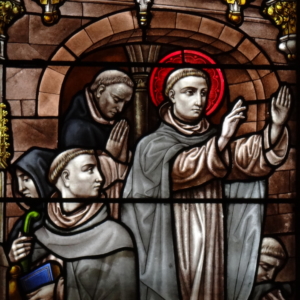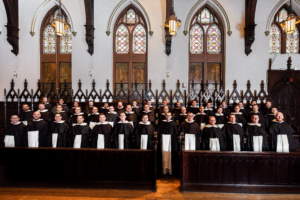
The second of a series of three interviews with Fr. Nageeb Michael, OP, this video focuses on the current suffering of Iraqi Christians. Fr. Nageeb speaks at length about the current persecution of the Christian community in his homeland and even introduces his viewers to priests he knows personally who were killed for the Christian faith. The interview concludes with a plea for solidarity with and prayers for the Christian community of Iraq.
When we look back on the past, it is sometimes tempting to think of historical events as having a certain inevitability: because they happened in the way they did, it was necessary that they happen in such a way. With the aid of hindsight, we can discern how certain cultural movements or personalities influenced particular events or individuals and draw out connections and causalities that may even have been latent at the time. In itself, this can be a useful and fruitful exercise, especially when we consider the providential hand of God who is able to draw good even out of the evil actions of men.
Life in prison without parole. With this sentence the murder trial of Kermit Gosnell has come to an end. Yet another horrific, unmentionable injustice has been addressed by our nation’s legal system. The murder of infants had tipped the golden scales of justice, but with the piercing percussion of a swift gavel strike, the balance was restored. Next case. Could it be that justice is so easy?
To many Christians, recent legal restrictions such as the HHS mandate seem like a “soft persecution.” It is tempting for us to portray such restrictions using the language and imagery of martyrdom. But is it accurate at all? One scholar, writing recently, thinks that contemporary Christians have the whole thing wrong—the history of martyrdom and its application today. Don’t we risk making a ridiculous comparison?
What does our fantasy life say about us? Do thoughts determine our character, or is it only actions that count? The question has been asked and answered in various ways. Movies like Minority Report have played on the intuitive notion that punishing someone for a crime they have not yet committed is unjust. Or consider a 1961 episode of the Twilight Zone, “A Penny for Your Thoughts,” in which a bank clerk gains the ability to read thoughts. He “hears” an old trusted employee, Mr. Smithers, plotting in his head to rob the bank. Mr. Smithers does not actually rob the bank, because he is too afraid, but the aged employee does, however, admit that he thinks about doing it everyday.
First Communion season is upon us. Young boys and girls in their white suits and white dresses line the aisles of churches across the country. Some come with smiles a mile wide, and others with lips nervously quivering. Why all the fuss?
The Greeks thought heroism and beauty belonged together. The Iliad, the Odyssey, and many myths are full to bursting with beautiful heroes doing beautiful things—and ugly things, but still doing them beautifully. They demanded that their heroes be beautiful, which is why so many statues and busts commemorate the politicians, leaders, and wealthy men of the day as models of physical perfection—even when we know them to have been dumpy, hook-nosed, or puny in real life.
God has never worked like that.
And when he had said this, as they were looking on, he was lifted up, and a cloud took him out of their sight.
—Acts 1:9
What are we to make of the Ascension? To some it may seem little more than a neat, miraculous way for Jesus to bid goodbye to His disciples. Pope Emeritus Benedict XVI, however, in his book Jesus of Nazareth, helps us to understand this mystery in a deeper way. In particular, he highlights the importance of a detail we might otherwise regard as insignificant: the presence of the cloud. Benedict calls this “unambiguously theological language” and recalls the instances throughout Scripture when the presence of a cloud marks some great event: the Exodus from Egypt (when Israel was led by a pillar of cloud through the desert), the Tent of Meeting (where Moses often conversed with the Most High, who was concealed in a cloud that filled the dwelling), and the Transfiguration (when the Father’s voice was heard coming from a cloud).
Have you ever been to a portrait gallery? It’s extraordinary, really: a bunch of people walking around for hours, looking at face after face after face. And do you remember your old class photos? Rows upon rows of faces, staring back at you. And if you’ve ever been to a bureau to get a driver’s license, you have probably noticed the same remarkably consistent pattern—you need your face on a card to get your hands on the wheel.
Last week I reread The Great Gatsby for the first time since a summer vacation in high school. With the buzz about the upcoming film (out this Friday), I wanted to revisit what I vaguely remembered to be a good but sad story.