Mercy is for the weak!
As a kid, I always found this line from Karate Kid to be hilarious. Maybe it was the delivery or the context, but it always had me roaring. Years later, the scene is still funny, but now I find the general attitude it embodies to be laughable as well. One can find many people who echo this sentiment, “Mercy is for the weak,” but I doubt they have ever thought about what mercy really is.
Who can be merciful? We ask mercy of those who have power over us. A child asks her parent for mercy when she has broken a lamp. A student asks her teacher for mercy when requesting an extension. A player asks for mercy when he asks his opponent to take it easy on him during a game. The accused asks for mercy from the judge or jury. Asking for mercy is making an appeal to one who has the power to remove our misery. The child’s misery lies in the guilt of knowing she did wrong. The student’s misery lies in the fact that she cannot finish the paper in the time allotted. The player’s misery lies in the fact that he isn’t as good as his opponent. The misery of the accused lies in his powerlessness in deciding his own fate. The weak need the mercy of the strong and powerful. Thus, mercy is the exercise of the strength to remove the misery of another. Only the strong can be merciful.
And Jesus said, ‘Father, forgive them; for they know not what they do.’ (Lk 23:34)
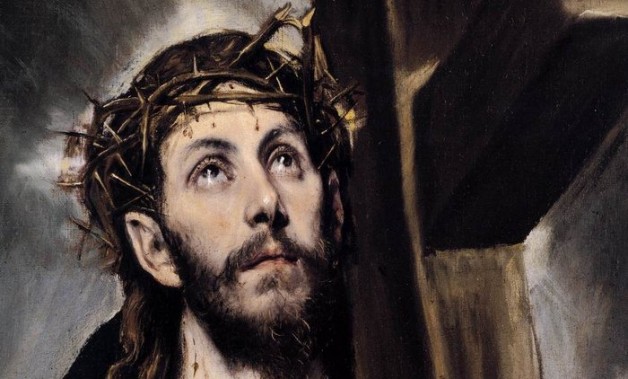
The mercy of a crucified man should make us pause. How is this man offering mercy? He is in the weakest position imaginable: a naked and dying criminal. What mercy can he offer? Not only the mercy of an innocent and just man; but the mercy of God. The power of Christ’s mercy is found in both his human and divine natures. The innocent and upright man always has a certain power. This is fitting when we consider that the meaning of “virtue” is power. The virtuous person is a powerful person, since he has the power to act in accord with the perfection of his nature. The virtuous person acts in a truly human way and is truly reckoned to be a good person. There is something about a good person that makes us act differently, whether that entails watching our language or realizing that certain actions aren’t appropriate around them. The virtuous or good person always has a power that can translate into mercy. On the other hand, the power of God lies in who God is: the One through whom all things were created and continue to exist, the First Cause. The power of God to be merciful flows from His absolute Goodness and his Lordship over all creation.
Christ’s mercy on the cross is given to us through the dual fonts of his humanity and his divinity. It is a mercy that can remove every misery, not just the particular misery that we might call attention to in a moment of felt weakness. A child may feel guilty about breaking a certain lamp and her parent might offer her a particular mercy, but though it may remove her guilt, this mercy can’t make the child less clumsy. The mercy of Christ can do both: remove the guilt of sin and restore the power to do good. Sin is taken away, our wounds are healed, and a new relationship through the Son of God is given to us.
This new relationship is particularly demonstrated in the martyrs. These are men, women, and children who witness to the power of God’s mercy; so much so that they share in that same power. The striking thing about each martyr is that they relive and reenact the merciful forgiveness of Christ. At the moment before their death, when no one would blame them for fear or anger towards an unjust oppressor, they offer mercy. They overturn the tables of power in a radical way. The power of the oppressor over their bodily life is shown to be less than that of one who lives in conformity with Christ. In the act of offering mercy, the martyrs demonstrate that they hold the true power: Power to intercede for the misery of their executioners, power to forgive their executioners’ hatred and rage, power to love those who persecute them.
Truly, God’s power is made perfect in the weakness of His saints, who in turn radiate the tremendous power of His mercy.
✠
Image: El Greco, Christ Carrying the Cross