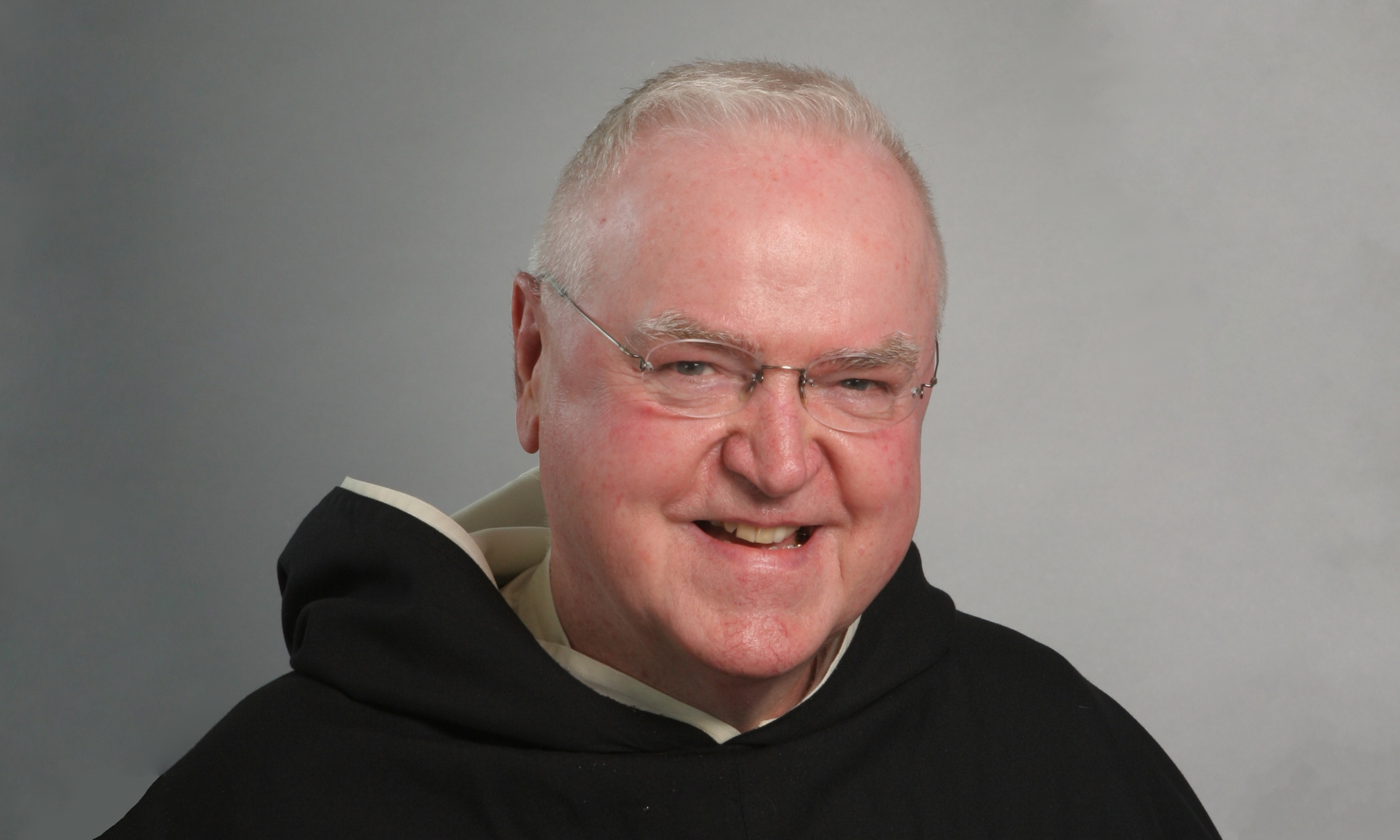
Br. Henry Stephan, O.P.
Br. Henry Stephan entered the Order of Preachers in 2011. He is a graduate of Princeton University, where he studied Politics.
At the reception of a Catholic wedding I lately attended, a groomsman made his way over to the table where a priest and I were sitting. After enthusiastically shaking our hands, he turned to the priest and said, “Father, the service was so beautiful, it really made me want to believe.” Without so much as a by-your-leave, he turned and began pumping the arms of still further guests. Now, one might be tempted to dismiss this comment as nothing more than a kind remark made by a gentleman who was, in all probability, in his cups. Yet he said it with enough sincerity and conviction (and lucidity, for that matter) that his words gave me pause.
The Editor’s Conference Room at a major English-language newspaper. White smoke is rising from the Sistine Chapel, but the identity of the new pope is as yet unknown. The EDITOR in chief sits at the head of the table, hunched over the speakerphone and straining to hear. From said speakerphone comes the disembodied voice of the paper’s REPORTER on the ground at St. Peter’s Square. Seated around the table are the chief European correspondent, EUROPE, the editor of the editorial page, OPINION, and sleeping peaceably at the other end of the table, the OBITUARY editor.
EDITOR: Can you hear us, Ed? Hello, are you there?
The wound is still fresh and the shock of the blow makes the sting all the worse. The sadness that comes with death is something we are all too familiar with, but the ambiguity of the papal resignation leaves us confused. So many of us see Pope Benedict XVI as a spiritual father, whose works from both before and during his pontificate affect us profoundly. How could he leave us this way? Even as we seek to understand his reasons, we are left frustrated and uncertain.
Every four years, our republic celebrates the closest thing we have to a civic liturgy as we inaugurate the President of the United States for a term in office. Compared with coronations of monarchs in days of yore, it is an uncomplicated, straightforward ceremony. Yet for all its republican simplicity, the ritual itself is a powerful expression of who we are as a nation and of the self-government we have inherited from our fathers.
I will admit that when I first heard that Pope Benedict XVI was joining the tweeting masses, I felt like Nathaniel in the Gospel of John: “Twitter? Can anything good come out of Twitter?” Why, I wondered, was the Holy Father persuaded to join the endlessly vapid, emotionally incontinent primal scream that passes for our global online discourse? Does this mean that every Fr. Tom, Dick, and Harry will feel compelled to contribute to our national attention deficit disorder with homilettes in 140 characters or less? Heaven forfend.
There is nothing quite like election night. The thrill of victory, the agony of defeat—for the follower of politics, it’s both a solemn fulfillment of civic duty and something like the Super Bowl. This past Tuesday night, a tight race broke decisively for President Obama, as the Democratic campaign nearly swept the battleground states and won all the close Senate races. As the dust settles, Catholics of every stripe are coming to terms with the political realignment augured by the President’s victory. It is essential that we view these developments with the eyes of faith, and avoid overreactions or hysterics in either direction. Let’s consider some of the most prominent post-election responses, and how we might move forward.
Angel of God, my Guardian dear, to whom God’s love commits me here, ever this day be at my side, to light, to guard, to rule, to guide. Amen.
Today, the feast of the Guardian Angels, reminds me of this childhood prayer, which I used to say every night along with the Our Father and Hail Mary. As I grew up, the prayer unfortunately disappeared from my spiritual life, along with any particular attention to the angels at all. Devotion to one’s guardian angel seemed so sentimental, so pietistic—more “Precious Moments” than Fra Angelico.