Br. Joseph-Anthony Kress, O.P.
Br. Joseph-Anthony Kress entered the Order of Preachers in 2010. He is a graduate of Franciscan University of Steubenville, where he studied philosophy and theology.
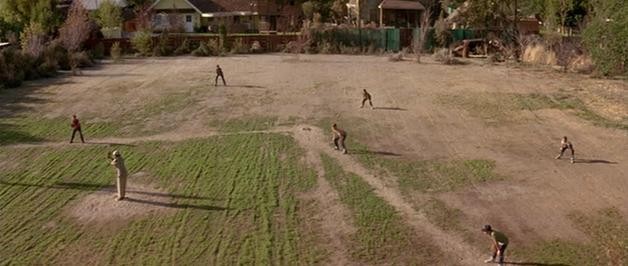
This month marks the 20th anniversary of one of the great American movies, The Sandlot. Formative for a generation of children, this movie was one of many movies in the early 90′s that focused on the childhood love of sports and the heartwarming story of an underdog rising to success. The Sandlot has given rise to iconic quotes such as, “You’re killing me Smalls!” and “FOR-EV-ER” as well as a comprehensive list of acceptable nominal references to George Herbert “Babe” Ruth: “The Sultan of Swat, The King of Crash, The Colossus of Clout, The Great Bambino!”
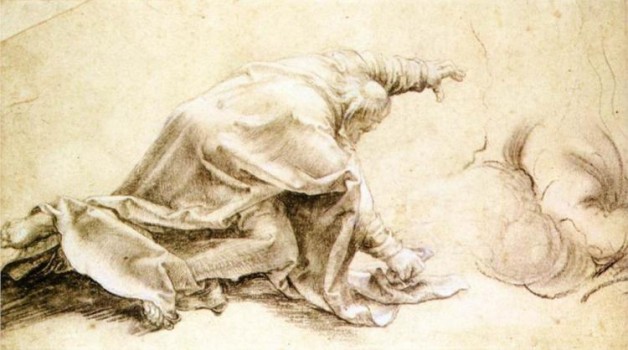
While Jesus was praying on the mountain, his appearance suddenly changed and his clothes became dazzling white. At that moment two men appeared and began to have a conversation with Jesus: none other than Moses and Elijah themselves. Luke is the only Gospel writer to inform his audience about the topic of discussion between the three men. He says that these men “appeared in glory and spoke of his exodus” (Lk 9:31). This is an interesting choice of words. The Greek word that Luke uses is exodos, meaning a departure or exit. So this reading, which we will hear in this upcoming Sunday’s Gospel, raises the question: “From what is Christ departing?”
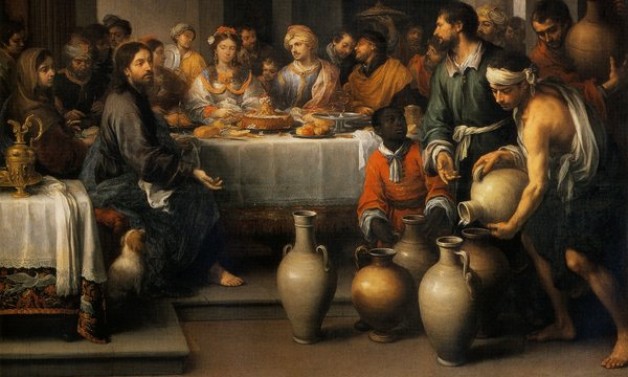
“In wine there is truth.” This ancient proverb often applies in some not so becoming situations, explaining those unfortunate actions and words inspired by an extra drink or two. Although the phrase dates back to the Greco-Roman period, it is as true now as ever, but not as one would think. The Gospel readings for today and this past Sunday both include references to wine. Today we hear about the importance of placing new wine into new wine skins. Yesterday we heard the account of the miracle of the wedding feast at Cana, where Jesus turns water into wine. The images of wine and vineyards are numerous in his teaching. This leads us to ask the question, “How much truth can we find in wine?”
“Rejoice in the Lord always; again I say, rejoice! Indeed, the Lord is near.” The entrance antiphon for this coming Sunday’s Mass reminds us of the proximity of our Lord’s coming. We are now in the middle of Advent. Two weeks are behind us, but two weeks still stand between us and Christmas. The midpoint of any period of expectation can easily become a time of complacency, but the Church startles us awake and reminds us: “Rejoice in the Lord!”
It is often said that death is the least discriminating thing on earth. Death is not impressed by wealth, status, beauty, or age. Every human being who walks the earth has had or will have an experience with it. At some point in our lives, we all suffer the loss of someone who is dear to us, whether it is a family member or a close friend. And in the end, we will have to face death itself as we come to the close of our earthly life.
Instagram has taken off like a rocket. In just under two years this unique social network has gained over 80 million registered users. Instagram thrives on turning photos of everyday life into trendy, artsy images. Photos are squared to resemble old Polaroid images, and filters are applied to give the photo an artistic look, with the saturation adjusted to emphasize different parts of the picture. As more and more people choose to transform their snapshots with Instagram, I ask, “Why are Instagram images preferred over a normal photo?” I think the answer is that the Instagram filters do something our eyes cannot: They adjust the color and the saturation of light in order to distract us from seeing the reality of the entire picture. We focus on one thing while the rest is blurred or skewed.
The latest installment of the Bourne movie franchise, The Bourne Legacy, opens today in theaters. Out of the three previous movies (The Bourne Identity, The Bourne Supremacy, and The Bourne Ultimatum), I particularly like the second because it deftly illustrates the human need for forgiveness.
A group of passengers stood bravely in the face of evil on September 11, 2001. These passengers took it upon themselves to try to regain control of United Flight 93 after terrorists took the plane hostage. The actions of these passengers were acts of valor, heroism, patriotism, and dare I say faith. The story of Thomas Burnett, Jr., particularly reveals how one man’s faith encouraged him to take action against evil.
The other night I saw the award winning film, The Artist, which portrays the relationship between two actors during the 1920s, one a popular silent film star, the other an up and coming young starlet from the innovative “talkies.” A major theme of the film is the relationship between pride and pity, exemplified by the two main characters. First, George’s life begins to spiral downwards when the people demand more “talkies.” He stubbornly refuses to make the transition from the silent screen to the audible screen. As he loses his fame and fortune, he is continually confronted with the cause of this loss, his pride.
Right now is a great time of year to be a soccer fan. The European leagues are coming to a close, the MLS is just starting its season, the UEFA Champions League final is a week away, and the UEFA Euro 2012 is about a month away. That is a lot of soccer to digest in a short amount of time. All of this top-flight soccer prompts me to reflect on the beauty of the sport, which, after all, is known across the world as “the beautiful game.”