Br. Raphael Forbing, O.P.
Br. Raphael Forbing entered the Order of Preachers in 2009. He is a graduate of Northern Michigan University, where he studied public relations. He worked as a para-social worker before entering the Order.
Jesus said to him, “Have I been with you for so long a time and you still do not know me, Philip? Whoever has seen me has seen the Father. How can you say, ‘Show us the Father’? Do you not believe that I am in the Father and the Father is in me? The words that I speak to you I do not speak on my own. The Father who dwells in me is doing his works. Believe me that I am in the Father and the Father is in me, or else, believe because of the works themselves” (Jn 14:9-11).
This excerpt from the Gospel of today’s feast of the holy Apostles Philip and James packs quite a punch. Jesus at once rebukes Philip for his lack of faith and instructs his disciples of the Father-Son relationship in the Trinity. He reveals to them that He and the Father are One and that it is truly the Father who is speaking to them. He even explains that it is really the Father who is the principle of His works.
“Pilate said to him, ‘What is truth?’” (John 18:38a)
In a few days, we will see Jesus standing in the praetorium and Pontius Pilate, a government official and not a philosopher, asking Him this question. Neither Pilate nor the ancient philosophers may have been able to associate truth with God as Christians know Him, but a philosophical understanding may help us to articulate some of the why and how beyond the what of Pilate’s question.
The holy friends of Christ rejoice in heaven; they followed in his footsteps to the end. They have shed their blood for love of him and will reign with him for ever.
—Magnificat Antiphon for II Vespers, Common of Several Martyrs
In his work On Friendship, Marcus Tullius Cicero, an ancient Roman philosopher and orator, treats the subject of friendship as he also extols his late, beloved friend Scipio. He writes:
Who would not lose in his loneliness the zest for all pleasures? . . . ‘If a man could ascend to heaven and get a clear view of the natural order of the universe, and the beauty of the heavenly bodies, that wonderful spectacle would give him small pleasure, though nothing could be conceived more delightful if he had but had some one to whom to tell what he had seen.’ So true it is that Nature abhors isolation, and ever leans upon something as a stay and support; and this is found in its most pleasing form in our closest friend.
Imagine there’s no Heaven
It’s easy if you try
No Hell below us
Above us only sky
Imagine all the people living for today
About a week or so ago, an old friend mentioned that his Halloween decorations had gone up. Yes, “commercial USA” is abuzz these days, ramping up for the huge “holiday push”: Halloween, Thanksgiving, Christmas, and New Year’s. Some folks are preparing their Halloween costumes, while others, planning further ahead, are assembling their Christmas shopping lists and scheduling their time off, coordinating with spouses and friends, making trips to the nearest mall or outlet store, and so on. The time will fly.
Today’s feast, alternately called “The Passion of Saint John the Baptist,” “The Martyrdom of Saint John the Baptist,” and “The Beheading of Saint John the Baptist,” is not only a reminder to “keep one’s head” and not overindulge in food and drink when entertaining and making merry—it also reminds us that it is neither losing our good reputation nor the threat of man that we should fear, but God alone.
“Because I went to Mass on Sunday and put my twenty bucks in the offering basket, and I’m basically a good person, God doesn’t need anything else from me. So we’ll leave each other alone until next Sunday.” It’s a common enough belief.
Why, oh why, oh why is humility so difficult and painful to learn? If you’re like me, this is one of the first thoughts that comes to mind during an examination of conscience. Each day, despite admittedly modest, yet sincere, efforts to rein in pride and its offspring (i.e., vainglory, ambition, and presumption), we end up falling a thousand times. Once we recognize the fault—and we typically do so only after our pride issues in some external action, involving more than merely a vain thought—we usually proceed to rationalize it in some way. We say to ourselves that we only acted in the most practical manner, even if it wasn’t the most charitable; or we say that the matter was really out of our control, that we were only “victims of circumstance;” or perhaps we think, “Sure, if this was an ideal world, I would probably have acted differently, but I am who I am, and I can’t help how I was brought up.”
Such excuses are the low-hanging fruit on the tree called “The Real Reason Why”—easy grabs in a world of convenience and entitlement.
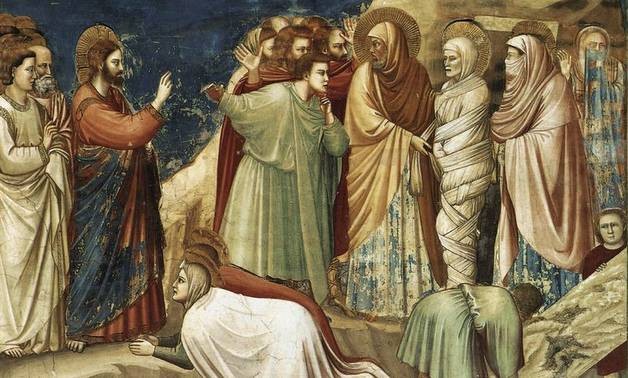
In our main chapel here at the House of Studies, one of the windows depicts Saint Dominic raising a young boy from the dead. The boy, the nephew of a local prelate, had been killed falling from a horse, and, on seeing the grief occasioned by his death, Saint Dominic immediately had recourse to the sacrifice of the Mass and intercessory prayer. The window shows him slightly elevated, standing on a cloud—a frequent iconographic symbol denoting the occurrence of a miracle—and, as the boy rises to new life, he stretches out his arms toward Dominic, while a crowd of townspeople looks on.
The older one gets the more one is prone to reflect on the current affairs of one’s life, comparing them with those of one’s youth. Yet, what exactly is adulthood? There seems to be no strict definition, and though age is usually an indication, it is not a hard and fast rule universally accepted. In general, we usually recognize adults as more capable of comprehending the profound experiences of life, those which impact us deeply, such as a spiritual conversion, discovering a vocation, finding a soulmate, or having a first child. These sorts of occasions can force us to acknowledge that some significant shift has occurred: we are no longer the same person we once were; some greater truth has been discovered which calls for a change in mindset and lifestyle. Sometimes that change can occur so deeply or drastically that, upon reflection, it can feel as though one has become a new person entirely, and thinking back on the way things used to be can feel surreal, like remembering someone else’s life. Marvelously, when through these changes we grow in sanctity and holiness, in our relationship with Jesus and commitment to the Church, we can attribute these changes to gifts of grace.