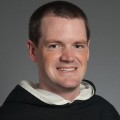
Br. Thomas Davenport, O.P.
Br. Thomas Davenport entered the Order of Preachers in 2010. He graduated from Stanford University with a PhD in Physics.
At first, I simply wanted to read some good books. The fact is, I hadn’t kept up with reading literature since I left high school English classes behind. There was a novel or two here or there when I was home on vacation but it was pretty sporadic. It’s not that I didn’t see the value of the classics of literature; I just never set aside the time to read them between my studies in math and science and a good bit of time wasting on the side. When I arrived at the novitiate, where there was limited access to TV and the Internet, the things that had previously been major temptations to waste time were, thankfully, no longer an option. I decided that when I wasn’t occupied in the work, prayer, or study of the novitiate, I would spend some time catching up on reading good books.
There I was, listening to a Catholic argument for Young Earth Creationism. Only a week earlier, I had explained to a friend how Catholics aren’t really susceptible to the fideistic Creationism seen in many Protestant churches. Now, I found myself before a Catholic speaker arguing for a historical reading of the six days of creation and claiming that the earth was only 6,000 years old: Not only did the Bible say so, but the Fathers of the Church said so, and until this century, all the Saints and Councils and Popes said so as well.
Words have a certain staying power. Most of them are in one ear and out the other, but every once in a while words seriously hit home and have a lasting impact. Today the Church celebrates St. Anthony of Egypt, the “Father of Monks.” As a young man, he walked into a church one day and heard the words of Jesus proclaimed in the Gospel, “If you would be perfect, go, sell what you possess and give to the poor, and you will have treasure in heaven; and come, follow me” (Mt 19:21). While he had probably heard these words many times before, something was different that time. He left the church with a firm conviction to do exactly what Jesus said. He sold all his possessions and became a hermit in the Egyptian desert.
It happens whenever a group of people spend a lot of time studying the same thing. Physicists tell quantum-mechanics jokes, musicians tell voice-part jokes, and Dominicans tell virtue-ethics jokes. Often enough, a word means one thing in common parlance and something very different in a specialized context, whether that context be physics, music, or moral theology. In this particular case, we were talking about our struggles in community life, and a brother was self-deprecatingly going through a litany of ways in which he lacks self-control. Summing them up, he profoundly declared, “I am the incontinent man.” Everyone burst out laughing.
Of course, we all knew what he meant.
The key to a good holiday is specificity. Historical events are always good candidates: Christmas, Thanksgiving, or the Fourth of July. Right away you have some visuals, a theme to work with, and before you know it there are decorations, music—the whole nine yards. Failing a particular historical event, you can go for an individual: Martin Luther King, Jr. Day, Columbus Day, or Groundhog Day. Again, there’s a visual to work with, and if the person is worth commemorating, there’s usually opportunity for a good educational moment, too.
Nobody likes to look like a fool, especially not a Dominican. Sure, it can be fun to play the buffoon for a bit to get a laugh or to make a point as long as when the dust settles it’s perfectly clear that our ignorance was feigned. Those unfortunate situations when we get caught with our proverbial pants down usually lead to intense brooding and a frantic review of what mistake could possibly have left us looking so naïve. These moments can be educational and formative in many respects, sharpening our mental acuity and keeping us on guard against making the same mistake in the future. When applied to intellectual pursuits, this discriminating eye can help us obtain a clearer vision of the truth. A danger arises, however, when we turn such a sharp instrument on our brothers.
There is something amazing about watching the best athletes compete. In astounding feats of physical prowess, they stretch the human body to its physical and mental limits. Throw in a healthy dose of national pride, and you get the glory of the Olympic Games. Thousands of competitors from all over the world converge in one place for a great festival of sport, most of them competing in front of crowds larger than they have ever experienced, and all of them watched by massive audiences worldwide. This is probably the only time over the next four years that most Americans will even think about track and field or gymnastics, volleyball or water polo, and that’s not even mentioning the sports that don’t usually make prime time, like badminton, team handball, and men’s field hockey.
There’s something particularly satisfying about putting that last piece into a big puzzle. And nothing is more frustrating than the dreaded realization, as you are just about finished, that a piece is missing, and when the frantic search under chairs, tables, and couches ensues. Sure, the picture is mostly there and you can see whats going on, but there’s a gaping hole that screams for attention and demands to be filled. It’s bad enough if you simply knocked the piece off the table, or if it fell out of the box down in the basement, but what if you weren’t completely certain the piece ever existed in the first place?
It’s something I’ve gotten used to over the years, but, meeting so many new people in the past week at my summer assignment, I’ve been reacquainted with the convoluted process of answering the simple question, “Where are you from?” Because my father was an officer in the Army, we moved every few years, and it’s hard to get across such a variety of homes with the brevity that is expected by such a question. Every once in a while, comparing notes on hometowns leads to a discussion of what it was like to move around so much—being uprooted from friends and schools, being far from extended family, and having to learn a new area and way of living. In all honesty, though, it never seemed very odd or difficult to me, having known nothing else.
I’ve probably had the conversation a couple of dozen times over the years and, admittedly, with a bit more frequency since I started wearing medieval garb. When people discover that I’m Catholic and that I have a background in physics, they often want to know how exactly I do it—how I deal with all the tensions and “incompatibilities” between faith and science. The general impression seems to be that a scientist is not allowed to believe in religious mumbo-jumbo, and a Christian can’t really accept the findings of modern science.