To many Christians, recent legal restrictions such as the HHS mandate seem like a “soft persecution.” It is tempting for us to portray such restrictions using the language and imagery of martyrdom. But is it accurate at all? One scholar, writing recently, thinks that contemporary Christians have the whole thing wrong—the history of martyrdom and its application today. Don’t we risk making a ridiculous comparison?
The Editor’s Conference Room at a major English-language newspaper. White smoke is rising from the Sistine Chapel, but the identity of the new pope is as yet unknown. The EDITOR in chief sits at the head of the table, hunched over the speakerphone and straining to hear. From said speakerphone comes the disembodied voice of the paper’s REPORTER on the ground at St. Peter’s Square. Seated around the table are the chief European correspondent, EUROPE, the editor of the editorial page, OPINION, and sleeping peaceably at the other end of the table, the OBITUARY editor.
EDITOR: Can you hear us, Ed? Hello, are you there?
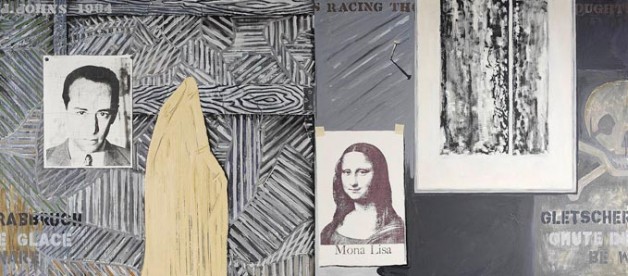
When Socrates had received his sentence, he stood up to address the assembly for the last time. He predicted that those who had convicted him would incur a bad reputation. To the Western mind, that’s putting it mildly: as an account of martyrdom for the sake of truth, the Apology of Socrates is second only to the Passion of the Christ. But Socrates hasn’t pleased everyone: Nietzsche had his doubts, and, what’s more, some museum-goers in Chicago are positively unimpressed.
Every four years, our republic celebrates the closest thing we have to a civic liturgy as we inaugurate the President of the United States for a term in office. Compared with coronations of monarchs in days of yore, it is an uncomplicated, straightforward ceremony. Yet for all its republican simplicity, the ritual itself is a powerful expression of who we are as a nation and of the self-government we have inherited from our fathers.
For millions of Americans, watching one of the many film adaptations made over the years of Dickens’s classic, A Christmas Carol, is an annual tradition. (I’m not ashamed to say my favorite is The Muppet Christmas Carol.) In all of these, Ebenezer Scrooge is transformed from an unfeeling miser to a warm, charitable man through the appearance of four ghosts on the night before Christmas.
The two women gazed at each other through the pane of bulletproof glass: one the Secretary of State of the most powerful nation on Earth, the other the maternal emissary of Earth’s Creator. Madam Secretary stood dressed in a smart red power suit; La Guadalupana was miraculously emblazoned on a humble peasant’s tilma. Unfortunately, their visit had to be short: Madam Secretary had an award banquet to attend in honor of her protection of abortion rights. She could not dawdle with the Virgin who had converted an Aztec nation to end child sacrifice. So she laid the pro-forma flowers at the foot of the tilma and, as if to encapsulate the irony of the encounter, she turned to the rector of the Basilica and asked the good monsignor to tell her who painted such a beautiful image.
Last week, George Weigel suggested here that the Catholic Church in the United States seriously consider whether it should “withdraw from the civil marriage business” by prohibiting her priests and deacons from officiating at marriages for purposes of state law. Such a voluntary refusal to participate in the civil government’s marriage law would, according to Weigel, anticipate government attempts to compel the Church to accept gay marriage. A certain witness value would be lost if she were to wait until State action made it impossible for faithful Catholic clergy to perform marriages recognized by civil law. By acting first, the Church would make a prophetic statement about the growing divide between ecclesial and civil authorities over the definition of marriage.
There is nothing quite like election night. The thrill of victory, the agony of defeat—for the follower of politics, it’s both a solemn fulfillment of civic duty and something like the Super Bowl. This past Tuesday night, a tight race broke decisively for President Obama, as the Democratic campaign nearly swept the battleground states and won all the close Senate races. As the dust settles, Catholics of every stripe are coming to terms with the political realignment augured by the President’s victory. It is essential that we view these developments with the eyes of faith, and avoid overreactions or hysterics in either direction. Let’s consider some of the most prominent post-election responses, and how we might move forward.
At last, Election Day is here! At last, after months of campaigns, hours of debates, and countless speeches, the time has come for us to cast our votes! This presidential election seems to carry a greater significance than most, for the choice before American voters today is not merely a choice between incumbent Barack Obama and challenger Mitt Romney, but a choice between the two visions of America they represent.
The polarization of our nation is readily apparent throughout this campaign season. Each side attacks the other as the greatest threat to the American way of life in order to win votes. Critical issues, such as the freedom of the Church to exercise her charitable mission, have slipped through the crossfire unnoticed. Millions of voters remain resolutely committed to the ideology of their party, dividing the country into red states, blue states, and swing states. Several other rifts have emerged during this campaign cycle: “makers” versus “takers”, the 99% versus the 1%, the Tea Party versus the Occupiers. With such stark divisions, one may wonder: what is it that unites us as a nation?
Day of wrath and doom impending,
David’s word with Sibyl’s blending,
Heaven and earth in ashes ending!
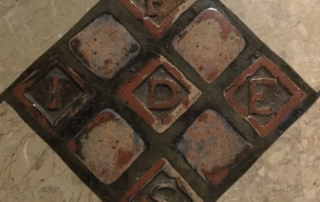
These dramatic lines introduce one of western culture’s most memorable pieces of music—the Dies Irae. Originally a poetic sequence for use in the funeral liturgy, the text has been adopted for original works by Mozart, Verdi, Dvořák, and others. Centuries of creative expression have flowered from this simple chant piece!