Pool Floats, Perico Ripiao, and the Great Upstate Escape: Inside the Dominican Summer Migration
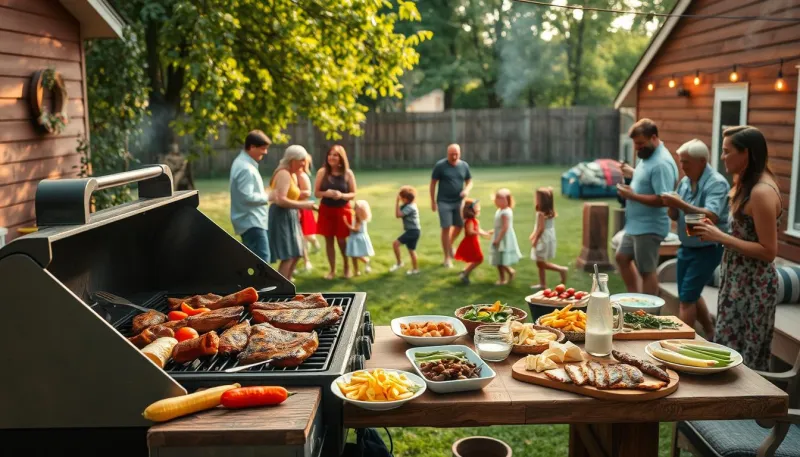
Photo: Dominican family summer BBQ backyard pool gathering upstate New York, via www.pouted.com
Somewhere around exit 16 on the New York State Thruway, the soundtrack changes. The bachata playlist gets a little louder, the kids in the back stop asking 'are we there yet,' and Titi Yolanda starts narrating which twisty road leads to whose house. It's the same ritual every summer weekend: the great Dominican migration out of New York City and into the hills of the Hudson Valley and Catskills.
If you grew up Jewish American, you might know the Catskills as the Borscht Belt — the resorts where your great-grandparents escaped the city. Well, consider this its modern, sazón-forward sequel. Dominican families have been quietly buying up summer homes, fixer-upper farmhouses, and parcels of land with room for a above-ground pool and a mammoth grill. Ask around and everyone knows someone with 'la finca' — and everyone has strong opinions about whose finca has the best pollo.
What Exactly Is a 'Finca' When It's a Two-Bedroom in Kerhonkson?
Let's be clear: nobody out here is running an actual agricultural operation. The word 'finca' — which in the Dominican Republic means a piece of rural land, often with mango trees and a caretaker — has been lovingly repurposed by second-generation New Yorkers to describe anything from a genuine five-acre property to a modest A-frame with a fire pit. The name is aspirational. The vibes are non-negotiable.
What matters is what happens there. The driveway fills up by Friday night. Someone's uncle arrives with a cooler that could store a small body. By Saturday morning, the speaker on the porch is playing Juan Luis Guerra, the domino table has migrated from the living room to the shade of whatever tree provides the best coverage, and the trash talk has already escalated to personal attacks that will be forgiven by Sunday.
The Madrugada BBQ Is a Feature, Not a Bug
Here's where first-timers get tripped up. You do not plan a finca BBQ for 2 p.m. like some suburban cookout with a timeline. The grill gets fired up when it gets fired up — which, thanks to a combination of island body clocks and a few rounds of Brugal and Coke, is frequently midnight.
There's something almost ceremonial about it. It's 1 a.m. in Kerhonkson, the crickets are doing their thing, someone's cousin is grilling chuletas by phone flashlight, and the conversation has somehow landed on the 1990s Dominican winter league. The kids who fell asleep at 10 are waking up again because the smell of the smoke traveled through the window screens. Nobody's tired. Nobody's checking the time. That's the whole point.
A Status Symbol You Can't Post About (But Everyone Does Anyway)
For second-generation Dominicans — the kids of Washington Heights, the Bronx, Lawrence, and Paterson — the finca means something specific. Our parents came here and rented. Owning land, even upstate land three hours from the bodega, is the kind of flex that doesn't need a caption. When your mother calls her sisters and says 'vengan pa' la finca este fin de semana,' there's a whole résumé folded into that sentence.
Of course, the Instagram stories happen anyway. The pool shots. The sunset over the mountains with a presidente in frame. The video of abuela — who claimed she didn't want to leave the city — absolutely demolishing everyone at dominoes while wearing her house dress and orthopedic slides.
The Island Rhythms, Transplanted
What makes these weekends feel less like a getaway and more like a homecoming is how completely the island's rhythms get rebuilt. Somebody always knows a neighbor with a mango tree 'that's basically ours.' The kids run feral until dark, the same way their parents did in Villa Mella or San Francisco de Macorís. Someone's father inspects the property line with the seriousness of a land surveyor. The Sunday-before-departure is a full production of cleaning, packing leftovers, and arguing about who's taking the last batch of moro.
And the community network is real. Dominican-owned spots upstate now include bodegas-in-exile (the gas station that stocks salami frito fixings), weekend parties at rented pavilions in Poughkeepsie parks, and yes, the occasional live perico ripiao band that gets booked through nothing more formal than a family group chat.
Why It Matters
There's a version of the American dream that says success means assimilating into someone else's summer — the lake house, the country club, the quiet. Dominican families upstate are writing a different draft. The dream, apparently, sounds like a Merengue playlist at 2 a.m., tastes like grilled pork with guava dipping sauce, and requires at least fourteen relatives on the property.
The city will always be home base — the jobs, the schools, the salon, the bodega that knows your order. But from June to September, a slice of the island operates at full capacity in the hills of New York State, no passport required.
Just make sure you bring your own folding chair. Trust us on this one.


