The Beans Are Boiling Somewhere in the Bronx: A Love Letter to Habichuelas con Dulce Season
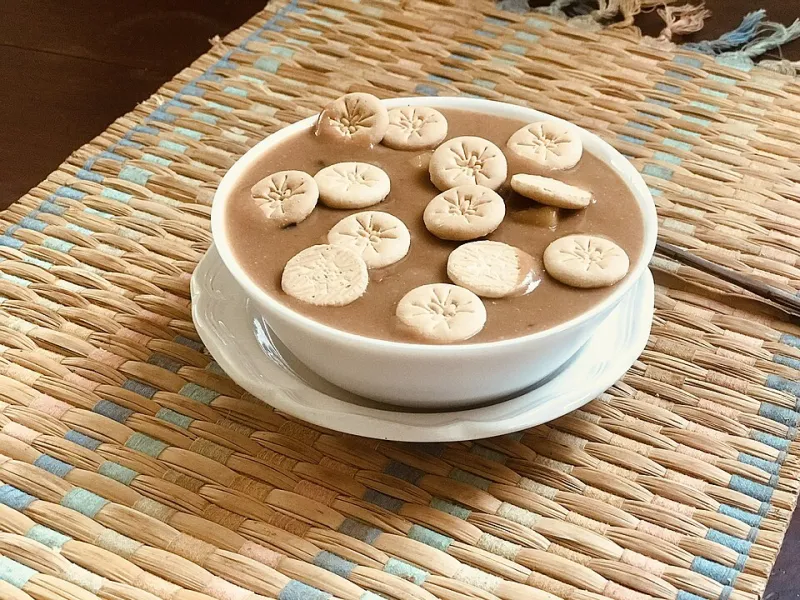
Photo: Arlene Campusano, CC BY-SA 4.0, via Wikimedia Commons
Somewhere in the Bronx right now, a pot of red beans is simmering with cinnamon sticks and sweet potato, and the person stirring it has probably already texted three family members a photo of the result. It's Lent. Which means, for Dominican households across the United States, it's habichuelas con dulce season — the shortest, sweetest, most fiercely protected window on the cultural calendar.
If you didn't grow up with it, here's the quick version: habichuelas con dulce is a sweet cream of red kidney beans, blended with coconut milk, sweetened condensed milk, cinnamon, and chunks of batata (Dominican sweet potato), often finished with raisins and little cubes of hard milk candy. It sounds strange. It is not. It tastes like someone turned a warm hug into a dessert.
A Dessert With a Curfew
Here's the thing that confuses non-Dominican coworkers every April: this dessert has a season, and the season is Lent. Not "spring." Not "whenever." Lent. Asking for habichuelas con dulce in October is like asking for a Thanksgiving turkey in July — technically possible, spiritually wrong.
"My coworkers found out I make it and asked why I don't just sell it year-round," says Yesenia, a home cook in Lawrence, Massachusetts, who's been making her mother's recipe for two decades. "I told her the beans don't even taste right in October. She thought I was lying. I wasn't."
That hyper-seasonality is exactly why the tradition survives. Scarcity builds ritual. When something only shows up a few weeks a year, it stops being food and starts being an event.
The Recipe Chain: Abuela, WhatsApp, and a Bodega Run
Every family's version is guarded like a state secret and shared like gossip. Ours starts with a handwritten notebook.
Abuela's notes — technically my aunt's now — are written in that universal abuela shorthand: "un poquito de canela," "coco hasta que se vea rico." No measurements you could actually follow. The notebook is less a recipe and more a certificate of authenticity.
The real instructions live in a four-minute video my cousin Yudelka recorded on her phone two years ago, filmed at a steep angle over a blender in Paterson, New Jersey. It has been forwarded through at least three family group chats, one church sister circle, and — somehow — a coworker in Connecticut who isn't even Dominican. That's how these recipes travel now. Not cookbooks. Forwarded videos with shaky camera work and a toddler yelling in the background.
Then comes the supply chain problem. Habichuelas rojas and batata are not stocked at every Trader Joe's. The pilgrimage to the local bodega or the Latin market on the avenue is part of the ritual itself — you know the season has arrived when the beans are stacked near the register and the sweet potatoes have a handwritten sign.
"The bodega guy sees me coming with the coconut milk and just nods," Yesenia laughs. "He knows. Everybody knows."
Why Bother? The Economics of Nostalgia
Let's be honest about the labor. This is not a dump-and-stir dessert. You soak, boil, blend, strain, simmer, and stir — for a result that most first-timers will politely side-eye because, again, it's beans.
But the effort is the point. Making habichuelas con dulce is a flex of cultural memory. It says: we know what time it is, we know who we are, and we have four hours on a Sunday to prove it.
And the distribution plan is non-negotiable. You do not make this dessert for yourself. You make it for your tía who's under the weather, your neighbor who mentioned it once in passing, your kid's teacher who dared to ask what the smell was. Tupperware circulates like currency. Every container that leaves your kitchen is a deposit in the community bank.
Second Generation, Same Sweet Beans
What's genuinely moving is watching the tradition mutate as it travels. In Queens, someone's blending in oat milk because their kid has a dairy allergy. In Orlando, a young dad found canned coconut cream at Publix and swears it's just as good. (It's not. But we let him have it.)
The dessert flexes without breaking. The core — beans, sweetness, Lent, sharing — holds steady while everything around it adapts to American grocery aisles and American schedules. That's the diaspora in miniature: improvise the details, protect the essence.
So if you get handed a small bowl of something beige-brown and mysterious this season, eat it. Ask for seconds. The second bowl, as any Dominican host will tell you, is not optional.
And if you're brave enough to make it yourself? Text a cousin. Start the video chain. The beans are waiting.