The Second Bowl Is Not Optional: Confessions of a Dominican Kitchen Hostage
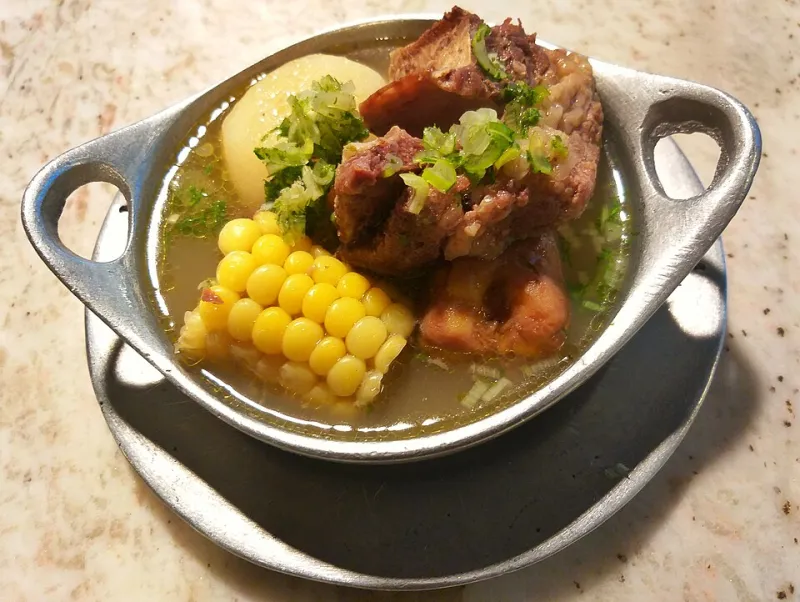
Photo: Caldobasico, CC BY-SA 4.0, via Wikimedia Commons
I want to file a formal complaint: I have never once left a Dominican household hungry, and I've tried. I've arrived full. I've arrived after Thanksgiving dinner. I've arrived with a doctor's note, metaphorically speaking. It has never mattered. The instant the door opens, the question is asked — not "how are you," but "¿comiste?" — and God help you if you hesitate.
'You Look Skinny' Is a Compliment and a Threat
Here's how it goes. You walk in. Before your jacket is off, there's a plate in your hand. You protest. This protest is understood as a courtesy, like knocking before entering — nobody actually expects you to mean it. Your tía assesses you from across the room, squints, and delivers the verdict: "Estás flaco." You're too skinny. This is simultaneously an insult to her cooking, a diagnosis, and a summons.
Refusing seconds is not an option; it's a negotiation you will lose. The strategy that works, passed down through generations, is to eat slowly, accept everything, and accept the to-go container without eye contact.
The Dishes That Crossed the Ocean
Every Dominican family in the US carried the same invisible luggage: recipes. Sancocho — the seven-meat monument to patience that only appears for birthdays, holidays, and "because it's Saturday." Mangú with los tres golpes: cheese, salami, and eggs, the breakfast that makes American cereal look like a punishment. Habichuelas guisadas, the bean stew that turns plain rice into a meal your ancestors would recognize.
These dishes did something remarkable: they kept the island in the kitchen. My mother, who has lived in New Jersey longer than she lived in Santo Domingo, still measures seasonality by what's in the pot. When sancocho weather arrives — which, in her house, is roughly whenever someone sneezes — the whole family gets the group text.
The Second Generation Is Cooking Back
Now here's where it gets interesting. The kids — us, the ones raised on both mangú and bagels — are cooking these dishes our own way. Scroll Instagram or TikTok and you'll find Dominican-American cooks doing things that would make a tía clutch her pearls: sancocho ramen. Plantain-based everything. Mangú boards, artfully styled, next to a flat white.
Purists groan. I say let them cook. Every wave of the diaspora has remixed the kitchen — the ingredients changed the moment our grandmothers hit a New York bodega instead of a mercado. What matters isn't the plating; it's the thread. The pot still gets stirred. The family still gets fed.
Food Is the Love Language, Whether You Asked or Not
Here's my actual theory: in Dominican culture, food is how we say the things we're too proud to say out loud. "I missed you" is a plate of arroz con pollo. "I'm worried about you" is a second bowl of soup placed in front of you without asking. "Welcome home" is habichuelas made the way you like, with the extra cilantro.
That's why the "you're too skinny" bit never dies. It was never really about weight. It's a declaration: I have been paying attention to you, and my attention has a ladle in it.
So the next time an abuela looks at you with concern and a serving spoon, don't fight it. Sit down. Eat the second bowl. Take the container home — you will take the container home — and know that somewhere, a woman who loves you is already planning what she's making next time.
And if you're second-generation and reading this: call your abuela. Ask for the recipe. Write it down, even though she'll say "un poquito de esto" and give you measurements that mean nothing. The recipe was never really the recipe. The recipe was an excuse to keep you at the table.