Six Blocks, One Island: Walking the Spiritual Map of Washington Heights
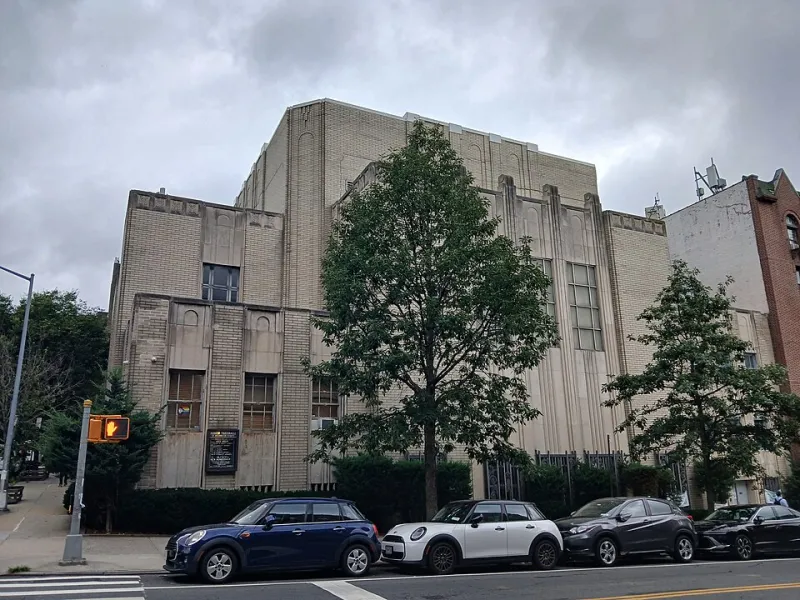
Photo: Epicgenius, CC BY-SA 4.0, via Wikimedia Commons
Start at the corner of 181st and St. Nicholas on a Saturday morning, and you'll hear it before you see it: the hiss of a press, the clatter of dominoes, a merengue track bleeding out of a third-floor window like the building itself has a soundtrack. Washington Heights isn't just the largest Dominican community in the United States. It's a map — one you navigate with your feet, your stomach, and, if you know where to look, your spirit.
The Bodega Is the Heartbeat
Every few blocks, there it is: the bodega, awning faded, bell chiming as you push through the door. It's a convenience store the way a grandmother's kitchen is a restaurant — technically true, spiritually incomplete.
Ramona Peña has run hers for 31 years. "People come in for milk," she says, laughing, "and leave with a plátano, a piece of cake for the kid, and advice about their landlord." That's the thing about the bodega: it's a bank (the corner where checks get cashed), a newsstand, a café, and a listening post. When the pandemic emptied out midtown Manhattan, the Heights' bodegas never closed. Ramona worked the register through the worst of it. "This neighborhood doesn't have the option of stopping," she told me simply.
Gentrification has tried, in its polite way, to make inroads. A new espresso bar opened two blocks south, all reclaimed wood and $7 lattes. Ramona shrugs. "They sell coffee. We sell coffee and we know your mother's name."
The Botánica: Where the Physical Meets the Spiritual
Keep walking. Turn off the avenue and you'll find one of the neighborhood's most quietly essential businesses: the botánica. From the sidewalk, it looks like a shop of colorful jars and statues. Inside, it's something closer to a pharmacy of the soul.
Luis Ferreras has owned his botánica for two decades. Customers come in for velas, colonias, and herbs — but also for direction. "Somebody lost a job, somebody's heart is broken, somebody's mother is sick," he explains. "They light a candle. They talk. They leave standing a little straighter." The botánica anchors traditions carried from the island — Santería, Catholic devotion, folk healing — and gives them a home in a six-floor walk-up city.
In a neighborhood where rents climb and leases get shaky, the botánica endures the way churches do: because the need doesn't disappear.
The Salon: Beauty as Community Infrastructure
Next stop: the salon, where the wait is an hour and nobody minds, because the wait is the point. Dominican salons — and their barbershop cousins — are the neighborhood's true social clubs.
Yolanda Mateo has been doing hair on Broadway for 26 years. Her chair has heard every confession, celebration, and political debate of the last quarter century. "I did three generations in one family," she says, working a roller with the ease of long practice. "Grandmother, mother, daughter. They argue here. They make up here."
When landlords raise rents, salons are often the first to wobble. But they're also the last to leave — because a neighborhood without its salon stops talking to itself.
Bachata From the Third Floor
You can't map the Heights without the music. On a summer evening, the blocks become an open-air playlist: bachata from one window, salsa from a passing car, a quinceañera spilling out of a community hall with a live band.
The music is the diaspora's native language. It's what plays at the cookouts in Highbridge Park and what the abuelos play low on Sunday mornings. And increasingly, it's the bridge — young Dominican-American artists from the Heights sampling their parents' records for a new generation on Spotify.
A Living Map, Under Pressure
Let's be honest: the map is being redrawn. Rents are up. Longtime families decamp to the Bronx, New Jersey, Reading, Rhode Island. Developers see square footage where we see stories.
But spend one afternoon walking these six blocks and you'll understand why the Heights holds. The bodega, the botánica, the salon, the music — they're not businesses and background noise. They're infrastructure of belonging. They survived, as Ramona puts it, "because we take care of each other out loud."
The neighborhood changes. The map stays. And somewhere, right now, a third-floor window is playing bachata for the whole block.