More Than Mass: How the Dominican Parish Became the Diaspora's Living Room

Photo by Photo by Stephanie Hernandez on Unsplash on Unsplash
If you grew up Dominican-American, you already know the church was never just a church. It was a networking event, a matchmaking service, a concert venue, and a second kitchen — all under one stained-glass roof.
Walk into just about any Catholic parish with a heavy Dominican congregation — in Washington Heights, Lawrence, Providence, or Paterson — and you'll find the same rhythm. The 10 a.m. Spanish Mass runs long, because of course it does. But nobody's checking their watch, because the real event starts the second Father says the final blessing.
The Choir That Sings Like It's Carnaval
Ask anyone raised in these parishes about the music and watch them smile. This isn't your typical Sunday organ-and-hymnal situation. Dominican church choirs bring güira, tambora, sometimes a full conga setup, and transform traditional hymns into something with actual swing.
"My mother sang in the coro for twenty years," says Yolanda, a second-generation Dominican from Rhode Island. "People came to Mass specifically when her group was scheduled. It was like a concert with communion."
The music does more than entertain. For kids who grew up speaking English at school and Spanish only at home, those merengue-flavored hymns were often the first place the culture and the faith felt like the same thing — not two worlds negotiating.
Coffee, Queque, and the Post-Mass Debrief
Then there's the cafeteria hour. Every parish with a Dominican community has one: a basement hall, folding tables, a percolator of café con leche that could power a small city, and someone's aunt selling pastelitos to fund the next fiesta patronal.
This is where the actual business of community happens. Job leads get passed around. Apartments get found. New arrivals from the island get connected with someone who knows someone. The post-Mass coffee circle is the original social network — no algorithm, just abuelas with excellent intel.
"My parents basically ran their entire social life out of that basement," laughs Jonathan, a parishioner from Paterson. "Weddings, baptisms, who was sick, who needed help with rent — my mother knew everything before the priest did."
The Festival Is a Matchmaking Operation (And Everyone Knows It)
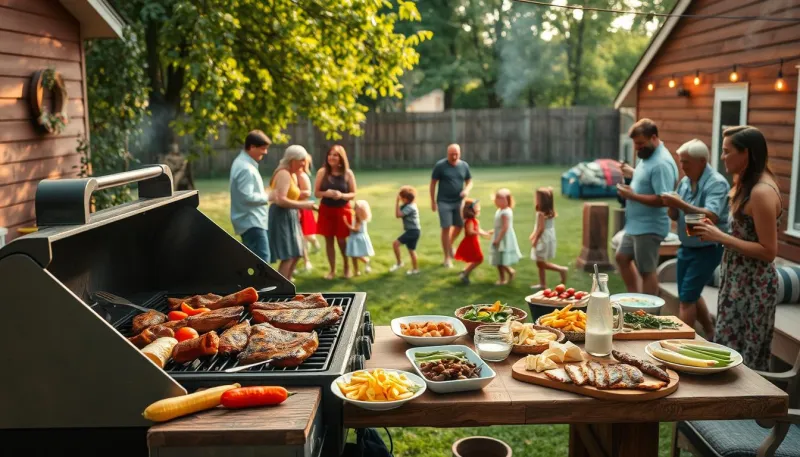
Then comes the parish festival — the feast day celebration for the patron saint, complete with empanadas, a raffle, and a stage where the youth group performs bachata covers. Officially, it's a fundraiser. Unofficially? It's the diaspora's most effective dating app.
Generations of Dominican-American couples met over a folding table at the Santo Cristo or Nuestra Señora celebration, supervised by every mother within a three-block radius. "My abuela literally engineered introductions at the festival," says one Bronx native. "She'd pretend she needed help carrying soda, and suddenly you're talking to her friend's grandson."
Even those who drifted from weekly Mass tend to come back for the festival. It's the one Sunday a year the whole extended community shows up — including the cousins who only appear at weddings, plus this.
When Faith Is the Culture Carrier
Here's the nuanced part: plenty of second-generation Dominicans don't attend Mass regularly anymore. But ask where they learned to dance, where they found their first job, where they met their spouse or their best friend, and the parish keeps coming up.
For families scattered across the suburbs, the church became the anchor — the place where Spanish stayed alive, where the food tasted like home, where being Dominican wasn't something to explain but something to simply be.
"I don't go every Sunday," admits Maria, 34, from Lawrence. "But my kids were baptized in that church, my parents' anniversary Mass was there, and I'll be at the festival with a plate of pastelitos like I never left. That place raised me as much as my house did."
The Beat Goes On
New parishes keep forming as the community spreads — into the Carolinas, Florida suburbs, New England. And wherever Dominicans settle, the pattern repeats: a Spanish Mass, a choir with rhythm, a coffee hour with agenda, and a festival that functions as the community's annual family reunion.
The faith may bring people in the door. But it's the sazón, the music, and the aunties that make them stay.