Please Don’t Sit There: A Field Guide to the Plastic-Wrapped Dominican Living Room
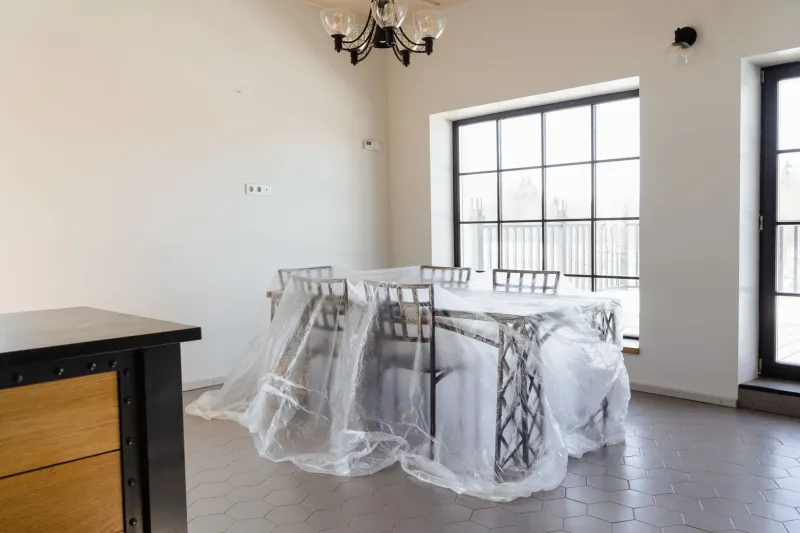
Every Dominican home has a room that is technically inside the house but operates by different rules. The sofa is covered in plastic. The coffee table holds photos, not coffee. The china cabinet is full of dishes that have never met a meal. And somewhere in the middle of it all is a chair that has been reserved for guests, special occasions, and absolutely nobody on a regular Tuesday.
Welcome to the sala. Please do not sit there.
The Room With a Higher Calling
The living room in many Dominican households is not really for living. It is for receiving. It is where you seat the priest, the aunt from out of town, the neighbor who came to pay respects, or the person your mother wants to impress. It is the room that says: we are doing well, we are respectable, and we have a matching set of furniture under that plastic.
This is not vanity. It is strategy. For immigrant families, the formal sala is a small theater of arrival. It holds the good curtains, the framed photos, the souvenir plates, and the graduation pictures that prove the sacrifices were worth it. The room is a promise made visible.
Plastic Wrap as Architecture
The plastic is the first clue. Some sofas are covered with clear plastic fitted so tightly you can still see the fabric pattern underneath. Others use sheets, throws, or a combination that suggests a fortress. The plastic is not there because the family hates comfort. It is there because the sofa is an investment, and the family plans to protect it for the next twenty years.
In Dominican-American homes, the plastic often survives the move. It survives the new apartment, the new city, and the new couch that was supposed to replace the old one. The plastic stays because the room is not about comfort. It is about care. It is a daily reminder that the good things were hard to get.
The China Cabinet Is Not for Dinner
The china cabinet is the room’s altar. Inside are glasses that were received as wedding gifts, plates from the old country, and a set of cups that only come out when someone important is visiting. There may also be a bottle of wine that has been aging since the Clinton administration, not because anyone is saving it for a special vintage, but because it is part of the display.
The cabinet is not about practicality. It is about memory and presentation. It holds the evidence of a life built across two countries. A plate from Santiago sits next to a mug from a dollar store. A graduation photo leans against a vase. The arrangement is not random. It is a family tree in objects.
The Chair That Has a Job
Every sala has a chair with a job. The job is to look good and remain empty. It might be the armchair with the wooden arms, the rocking chair that came from the island, or the corner chair that is technically available but emotionally off-limits. Children learn early that sitting there is not a casual choice. It is a statement.
‘That chair is for guests,’ a mother will say, even when the guest is her own sister. ‘You can sit on the plastic.’ The logic is not meant to be examined too closely. The chair is part of the room’s performance. If someone sits in it, the performance may collapse.
Aspiration You Can Vacuum
The formal living room is often described as a symbol of aspiration, which is true but incomplete. It is also a practical response to scarcity. When you have spent years renting apartments where nothing was truly yours, the good room becomes a way to claim space. It says: this is ours, and we are taking care of it.
That is why the plastic matters. It is not just protection for the sofa. It is protection for the idea that the family is moving forward. The room can be quiet and unused and still be full of meaning. It is a museum of respectability, but it is also a living room in the sense that it holds a family’s hopes.
When Guests Arrive (and When They Don’t)
The room comes alive when guests arrive. The plastic gets pulled back, or at least adjusted. Someone brings out the good glasses. The photos are dusted. The chair is offered to the oldest person in the room, and that person may refuse it twice before accepting.
After the guests leave, the room returns to its original state. The plastic is smoothed. The cushions are fluffed. The chair is empty again. It is not sad. It is just how the room works. It holds the memory of the visit until the next one.
The Museum That Still Hugs You
For younger Dominican-Americans, the formal sala can feel funny. Why have a couch you cannot use? Why keep the good dishes in a cabinet? But the room is not a joke. It is a love letter from people who wanted their children to have something nice and wanted to keep it nice for as long as possible.
So the next time you visit a Dominican home, look at the plastic and the photos and the chair that nobody sits in. Then sit where you are told, eat what you are offered, and admire the room from the approved angle. The sala is not there for your comfort. It is there for your respect. And honestly, that is a kind of hospitality too.


