The 6 A.M. Club: Inside the Beautifully Loud Mornings of a Dominican Household
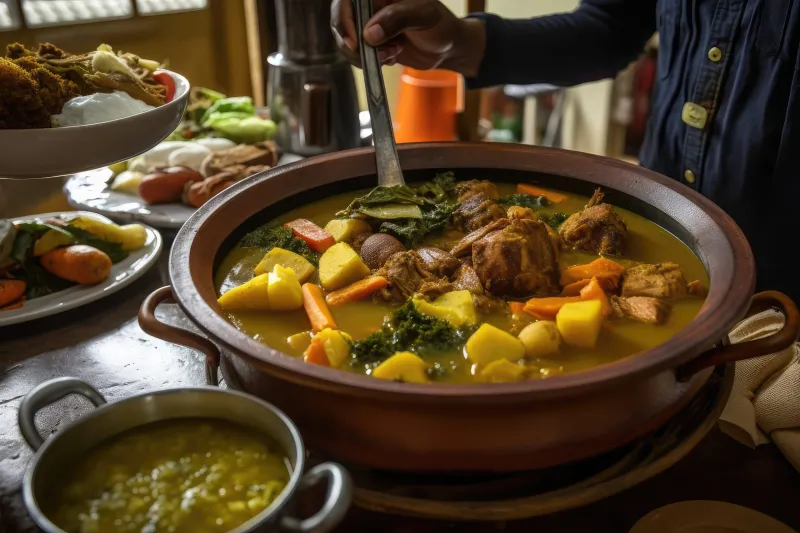
Photo: Dominican grandmother cooking traditional sancocho in kitchen early morning, via latinbusinesstoday.com
My alarm goes off at 7:15. My mother's went off — if you can even call it that — at 5:40, without an alarm at all, as if her body simply understood that the world's best work gets done while the streetlights are still on.
If you grew up in a Dominican household, you already know. The house was never quiet in the morning. It was operational. And if you married into one, or you're first-generation and still trying to explain it to your partner from Hoboken, this one's for you.
The Sancocho That Started Before You Woke Up
There's a particular kind of confusion that hits a non-Dominican guest the first time they sleep over. They shuffle into the kitchen at 9 A.M. expecting coffee and a bagel, and instead there's a pot the size of a small engine already at a rolling simmer. Yucca. Plátano. Corn on the cob standing at attention.
"Wait — when did this start?"
Earlier. It always started earlier.
Sancocho in a Dominican home isn't a recipe, it's a sunrise commitment. The root vegetables need time to break down, the meat needs to get honest with itself, and the cook — usually an abuela or tía who treats the stove like a cockpit — needs absolute silence and control until roughly the second cup of coffee. Asking to "help" before 7 A.M. is a violation of airspace.
Cafecito: The Original Morning Meeting
Before American workplaces discovered "stand-up meetings," Dominican kitchens had invented something better: the cafecito roundtable.
The espresso pot goes on before anything else. Then the morning briefing begins — who's sick, who's getting married, which cousin did what at the quinceañera, and a full geopolitical analysis of the neighborhood delivered with the confidence of a cable news anchor. You don't schedule this meeting. You're simply born into attendance.
For first-generation Dominican-Americans, this ritual is often the hardest one to translate. We grew up with 8 A.M. Zoom calls and cold brew on the go, but the second we hear that stovetop espresso pot hiss, something in our nervous system downshifts. Ten minutes. That's all it takes to feel like a kid again, standing on the linoleum in socks.
Sunday Bachata and the Mop
Then there's the institution: Sunday cleaning.
In most American households, cleaning the house is punishment. In a Dominican household on a Sunday morning, it's a full production — and the soundtrack is non-negotiable. Bachata from the speakers, Windex in hand, and a matriarch who can hit every note while simultaneously directing the dusting of furniture that guests are not permitted to touch.
Juan Luis Guerra at 8 A.M. is church. Monchy y Alexandra while doing the baseboards is therapy. Nobody taught us this. We absorbed it, the way you absorb the smell of your grandmother's house.
What We Keep, What We Let Go
I asked a few friends in the diaspora what parts of the early-morning rhythm survived their move into apartments in Boston, Chicago, and Charlotte.
Maria, 34, a nurse in Newark, says the cafecito stuck but the dawn sancocho didn't: "I do it maybe three times a year, holidays. But the coffee pot? Every single morning. Even when I'm running late. Even when I shouldn't."
Jose, 29, in Miami, admits the Sunday cleaning session survived — but the soundtrack changed. "I still play bachata while I clean. My roommate thinks I'm insane. My mother would say I'm almost raised right."
And almost raised right, in a Dominican household, is genuinely a compliment.
Set the Pot Tonight
Here's the thing about waking up early the Dominican way: it was never really about the hour. It was about the fact that the people you love are worth starting the day for — before work, before traffic, before the world starts asking things of you.
So this weekend, set the espresso pot the night before. Put on Juan Luis Guerra. Start the sancocho early, even if it's just for two.
The rest of the neighborhood is still asleep. Good. More for us.